
Is your child struggling with learning the short vowels?
As a reading teacher and a parent I know firsthand how hard it can be for many children to learn and retain the short vowel sounds. After years of studying reading research and direct experience teaching hundreds of children to read I have found thes 5 easy tips nearly miraculous for children to learn and master the short vowel sounds.
Tip # 1- Use Musical Memory!!!
Musical memory is an amazing gift. I bet you can still remember many songs from your childhood and youth yet you can’t remember what you ate for breakfast yesterday! Songs from your childhood stick with you for life.
Play the short vowel songs and follow along with the lyrics in any order but what I like to do is introduce each song one at a time on different days. Then after the songs are introduced, play the songs in the car or while getting ready for meals and various times of the day such as when your children are drawing or playing a game. Sing along with the songs and your children will join with you. Sing the songs without the recordings or video too to make sure that they are secured in your mind.
Before you know it your children will know all of the songs by heart!
Tip # 2- Do the Actions for each Short Vowel Sound!
Each short vowel character has a special action that helps children remember their sound.
Abby Apple screams /a/ and puts her hands out when she sees the ants on her apple.
Get an apple and pretend there are ants on it and yell /a/!!!!! Have your children do the same. They will love the dramatic play and the silliness of yelling because there are pretend ants on their apple!
Eddy Elf is just like the Elf on the shelf and he likes to rub the edge of his shelf! Talk to your children about the Elf on the Shelf (if relevant) and tell them that Eddy has to be careful not to fall off the edge so he always rubs the edge to know how much room he has and doesn’t fall!!! Rub the edge of shelves and tables and counters with your children and say /e/. Have the children do the same and have them say /e/ as they rub any edge. It works like magic!!! Kids, even 5th graders, enjoy this and learn the /e/ sound very quickly!
Itchy Insect is the funniest! Put a dot on your nose with a nontoxic marker and say that your nose itches that you must have gotten bit by an insect. Itch your nose and say /i/, /i/, /i/. The kids will think it’s funny. Do the same for them and tell them to say /i/ as they itch their noses.
Every time you have an itch or you see your child itching say /i/. Before you know it everyone will know that the short vowel sound of i is /i/!
Octy Octopus is a bit of a drama queen and LOVES to sing opera. When Octy sings she traces her mouth and sings the short vowel sound /o/. Extend the operatic sound of /o/ to /ooooooooooo/. Your kids will tell you to stop singing but still think it’s funny!!! Have your children sing /o/ and trace their mouths with the shape of an O.
Uppy Umbrella is a very easy action to remember. Say to your children that it looks like rain and we need to put our umbrellas up. Hold your thumb up and say /u/, /u/, /u/.
Thumbs up is easy to do and say /u/ up as you point your thumb up! Easy-peasey!
Tip #3- Visual Memory- The Characters are in the Shape of the Letters!
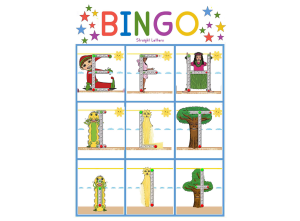
It’s so much easier to remember the sound of a letter when there is an embedded character in the shape of the letter! Before using characters when teaching reading to preschool-kindergarten children in Montessori schools it would typically take a year or 2 for a child to know all of their letter sounds and names.
When I started using letters with characters it only took weeks to months for the children to know all of their letter sounds and names. My fellow teachers were astounded. (Me too!) Of course, this was combined with songs and movements and early letter formation activities but the characters themselves are what captured the children’s minds and hearts. Kids LOVE characters!!! It’s a universal phenomenon.
Visual memory is powerful and when combined with adorable characters with unique personalities it’s a homerun.
Tip #4 – Repetition
As I said before, and I will repeat myself again, (so repetitive!!!!) play the songs and videos over and over for the children to hear. A day without music for children is a day that is missing something special. Occasionally, I would realize that the day seemed a bit blah and then suddenly realize that I had not played any music for the children.
Make it a routine to repeatedly play the short vowel songs and videos until you children have mastered all 5 short vowel sounds.
Tip # 5 – Play Easy Phonemic Awareness Games
What’s Phonemic Awareness? Basically, it’s the individual sounds in words. In the Short Vowel videos the lyrics go, “ I can hear the /o/ sound in hot and pot. /h/ /o/ /t/.” These words in the songs have the sounds segmented so the child can hear each individual sound.
All of the words segmented in the songs are simple short vowel words that children are familiar with. It may be a stretch for your child to say all the sounds with the video but with practice they soon will.
Pay attention to your child and give positive feedback when you notice they are saying the sounds along with the song.
As you go through your day with your children you can point out short vowel sounds in everyday objects around the house. Say things such as,
“Who can find the /m/ /i/ /t/ /t/ that’s lying on the floor?”
“Where is the /d/ /o/ /g/?”
“I spy something in this room that starts with the sound /a/.”
“I spy something on the shelf that has an /e/ in the middle.”
Your child will enjoy these activities. After you have demonstrated how to play the games, have your child initiate an “I Spy” game or “Who can find ….” This demonstrates real mastery when a child can lead the games!
If you child is struggling with reading request a FREE Reading Assessment with me by clicking this link- https://www.abctutor.org/free-assessment-form
Subscribe to my YouTube channel to find more great videos to help your child learn to read at https://www.youtube.com/channel/UCNGHDHzGin1mqnxaYEP7wpA
Also visit my website at abcTutor.org for information on teaching your child to read.