🧩 ✏️ The Foundation Builder: How La La’s Letters Teaches Letter Sounds and Names the Science of Reading Way
Learning to read is one of the most remarkable milestones in a child’s life.
For parents, it can feel like magic.
For teachers, it’s a marathon of patience, strategy, and science.
But what if there were a research-backed approach that transforms the difficult task of memorizing 52 abstract shapes (uppercase and lowercase letters) into an engaging, brain-friendly experience that sticks?
That’s exactly what La La’s Letters does. 🌈
Our handwriting and phonics program is built on the Science of Reading (SoR) — a field backed by over 50 years of research (Ehri, 1995; Moats, 2020; Seidenberg, 2017) explaining how the brain actually learns to read.
We don’t rely on guessing or memorization. Instead, we follow the brain’s blueprint — integrating letter names, sounds, and handwriting into one joyful, multisensory learning experience.
🧠 Core Concept: Building the Brain’s Reading Map
Every successful reading program has one mission: to help children achieve Orthographic Mapping (Ehri, 2014).
🗺️ Orthographic Mapping is the brain’s process for permanently storing written words — connecting what we see (letters), what we hear (sounds), and what we know (meaning).

Once the letter M is orthographically mapped, a child sees M, immediately says “/m/,” and knows it starts the word moon — the brain has locked that connection in for life.
✨ La La’s Letters accelerates this process by teaching with music, visuals, rhythm, movement, and emotion — all aligned to the four pillars proven to make orthographic mapping happen efficiently.
🔤 1️⃣ Simultaneous, Explicit, and Systematic Instruction
Traditional methods teach letter names, sounds, and writing in isolation — but La La’s Letters combines all three, simultaneously.
🧩 Simultaneity (All at once)
When a child learns a new letter, they:
-
Say the letter’s name (e.g., “M”),
-
Make the sound (/m/), and
-
Write the letter while singing along to the matching song.
This triple pairing of name + sound + movement strengthens neural pathways and builds reading fluency faster.
🎯 Explicit Instruction (No Guessing)
Each step is clear and direct:
“This is M. It says /m/. We write it starting at the sun line.”
🔢 Systematic Sequence (Not ABC Order)
La La’s Letters teaches letters in a research-based sequence that starts with simple straight-line formations and common sounds, giving children the tools to write and read real words sooner.
Research: Archer & Hughes (2011); National Reading Panel (2000)
✍️ 2️⃣ Writing It Into Memory: The Kinesthetic Link
Handwriting is far more than fine-motor practice — it’s brain training.
When children write letters, they form a motor memory that strengthens recall of both the sound and the shape.
✋ La La’s Letters handwriting uses a continuous stroke method, which research shows helps prevent letter reversals (like b and d).
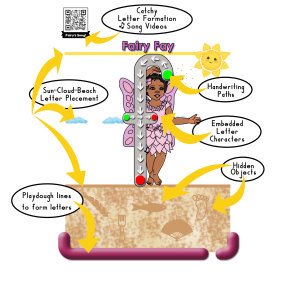
Each letter begins at a consistent point on the Sun–Cloud–Beach handwriting lines, building reliable muscle memory and spatial awareness — both essential for fluent reading and writing.

💡 Multi-Sensory Reinforcement:
Our program encourages tracing in sand, air-writing, and rainbow writing — all reinforcing the sound, motion, and visual pattern simultaneously for deeper encoding.
Research: James & Engelhardt (2012); Bara & Gentaz (2011)
🍎 3️⃣ The Imagination Advantage: Embedded Mnemonics
Young children remember stories far better than they remember symbols.
That’s why every La La’s Letters character is an embedded mnemonic — a picture that becomes the letter and instantly reminds children of its sound and meaning.
🧚♀️ Examples:
-
Abby Apple (a) helps children connect the letter to its sound. When Abby sees ants, she squeals “/a/!” — anchoring the sound, story, and shape together.
-
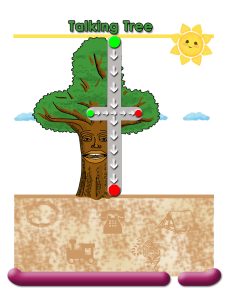
Talking Tree (t) models tall straight-line letters — its trunk and branches form the shape of the letter T.
-
Fairy Fay (f) guides children to trace her wand, then make delicate wings that whisper “/f/,” forming the letter f.
Each character’s personality, color, and storyline create emotional engagement, turning abstract print into meaningful, memorable play.
📈 Research consistently shows that children taught with mnemonic-based systems learn letter–sound connections twice as fast as those using traditional flashcards (Ehri & Wilce, 1987).
🧠 La La’s Letters directly applies this principle, transforming early literacy into a multisensory adventure where art, sound, and story build a foundation for fluent reading.
✨ When learning feels like a story, memory follows naturally.
Research: Ehri & Roberts (2006); McBride-Chang (1999)
🗣️ 4️⃣ The Sound Connection: Integrating Letter Knowledge with Phonological Awareness
Knowing a letter’s name is only half the story — understanding that it represents a sound is what transforms knowledge into real reading power.
That’s why La La’s Letters doesn’t stop at handwriting — it immerses children in a full sensory experience where music, movement, and discovery work together to build the reading brain.
🎶 In each La La’s Letters video song, children don’t just sit and watch — they sing, trace, and explore.
As they write each letter on their wipe-and-write page, they sing the matching sound and move in rhythm with the song, anchoring the phoneme (sound) to the grapheme (letter) and to the motor action of writing.
👂 Sound Comes First:
Children identify the sound:
“What’s the first sound in fairy?” → “/f/!”
✏️ Then Map It to Print:
“That sound /f/ is written with this letter — f.”
🎵 As the Letter f Song plays, children sing along and then search for five hidden objects in the sand that all begin with the /f/ sound — like feather, fork, fish, fan, and foot.
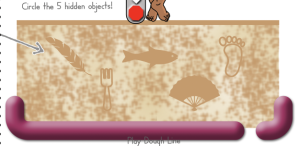
This playful discovery keeps them alert and engaged while reinforcing the sound-to-symbol connection through repetition and visual memory.
🔤 The combination of sound, symbol, song, and search transforms letter learning into an adventure. Children’s brains light up as they connect the auditory, visual, and kinesthetic pathways needed for fluent reading and writing.
🧠 Decades of research confirm that linking phonological awareness (the ability to hear and identify sounds) with print and movement dramatically increases reading success (Gillon, 2018; National Early Literacy Panel, 2008).
✨ With La La’s Letters, phonics becomes play — and every song, every stroke, and every hidden treasure brings children one step closer to reading with confidence and joy.
🎵 The Music Advantage: How La La’s Letters Songs Supercharge Learning
Music is a secret superpower for literacy! 🎶
Studies show rhythm and melody activate both hemispheres of the brain, improving focus, sequencing, and memory — all vital for reading.
🎤 In La La’s Letters, every letter has its own handwriting formation song that tells a mini story while guiding each stroke.
How Teachers Use It:
-
Begin class with a “Sing & Write” warm-up.
-
Play the Straight-Line Letter Songs while modeling on the board.
-
In centers, students trace wipe-and-write pages while following QR-linked playlists.
🧠 The rhythmic repetition cements correct formation, directionality, and phoneme awareness — transforming handwriting into joyful movement and music.
Research confirms that rhythm training strengthens neural timing for both music and speech (Tierney & Kraus, 2013), improving phonological awareness, auditory processing, and reading fluency.
Research: Patel (2008); Tierney & Kraus (2013); Gordon Institute for Music Learning (2015)
💪 Your Investment in Foundational Success
Whether you’re a parent, teacher, or donor, every moment spent with La La’s Letters builds a scientifically strong foundation for literacy.
Each song, stroke, and story aligns perfectly with the proven pillars of the Science of Reading — explicit instruction, multisensory engagement, systematic sequence, and joyful connection.
We’re not just teaching the alphabet.
We’re teaching the brain how to read — one song, one smile, and one confident writer at a time. 💕
📚 Key References
-
Ehri, L. C. (1995, 2014). Orthographic Mapping and Reading Development.
-
National Reading Panel. (2000). Teaching Children to Read: An Evidence-Based Assessment.
-
Archer, A., & Hughes, C. (2011). Explicit Instruction: Effective and Efficient Teaching.
-
James, K. H., & Engelhardt, L. (2012). The Effects of Handwriting Experience on Functional Brain Development in Preliteracy Children. Trends in Neuroscience and Education.
-
Ehri, L. C., & Roberts, T. (2006). The Roots of Learning to Read and Write: Acquisition of Letters and Phonemic Awareness.
-
Patel, A. D. (2008). Music, Language, and the Brain.
-
Tierney, A., & Kraus, N. (2013). Music Training Enhances Neural Processing of Speech Sounds.
-
Moats, L. (2020). Teaching Reading Is Rocket Science.
-
Seidenberg, M. (2017). Language at the Speed of Sight.